Columbia Engineering AI Entrepreneurship Series

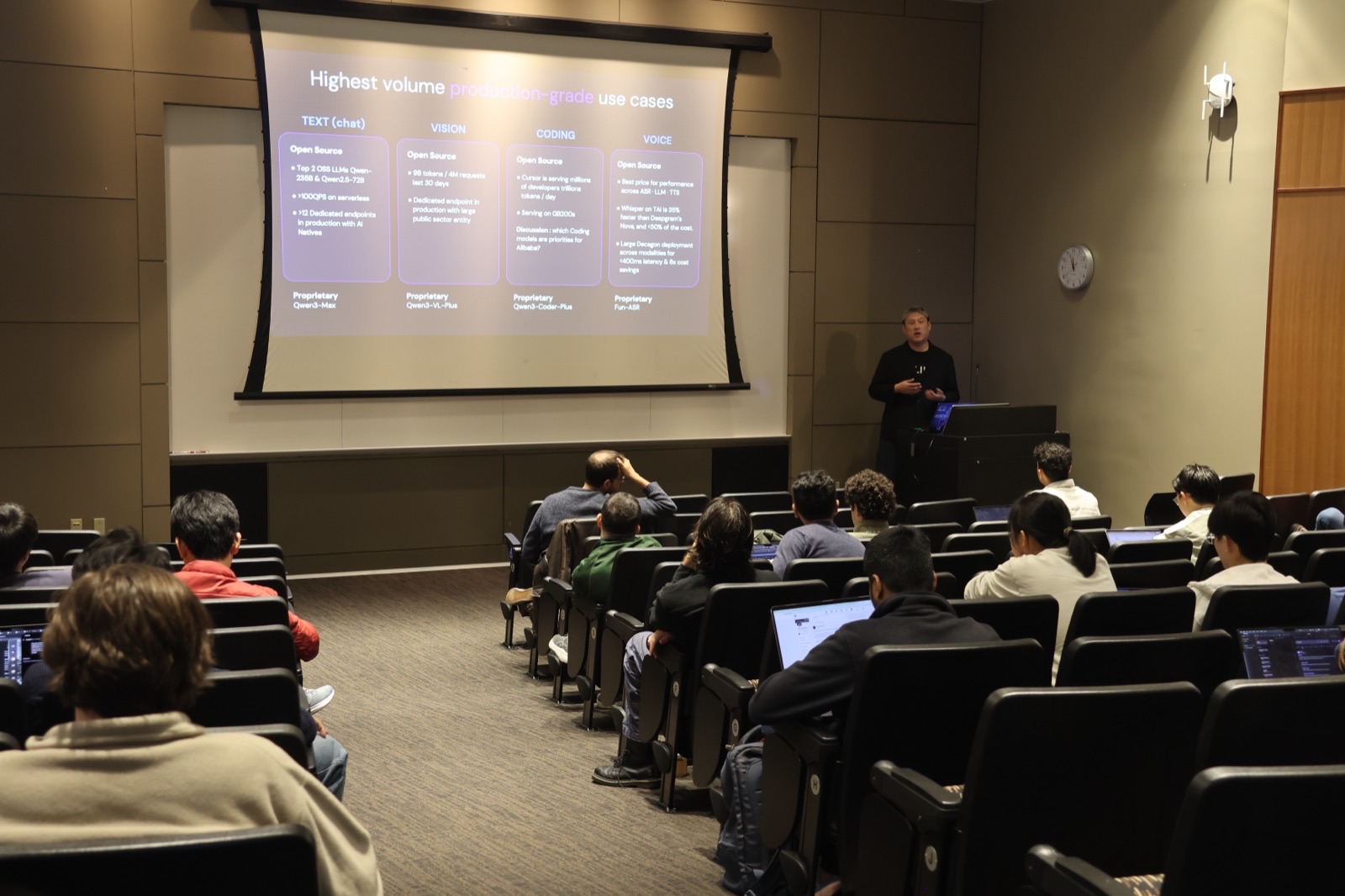
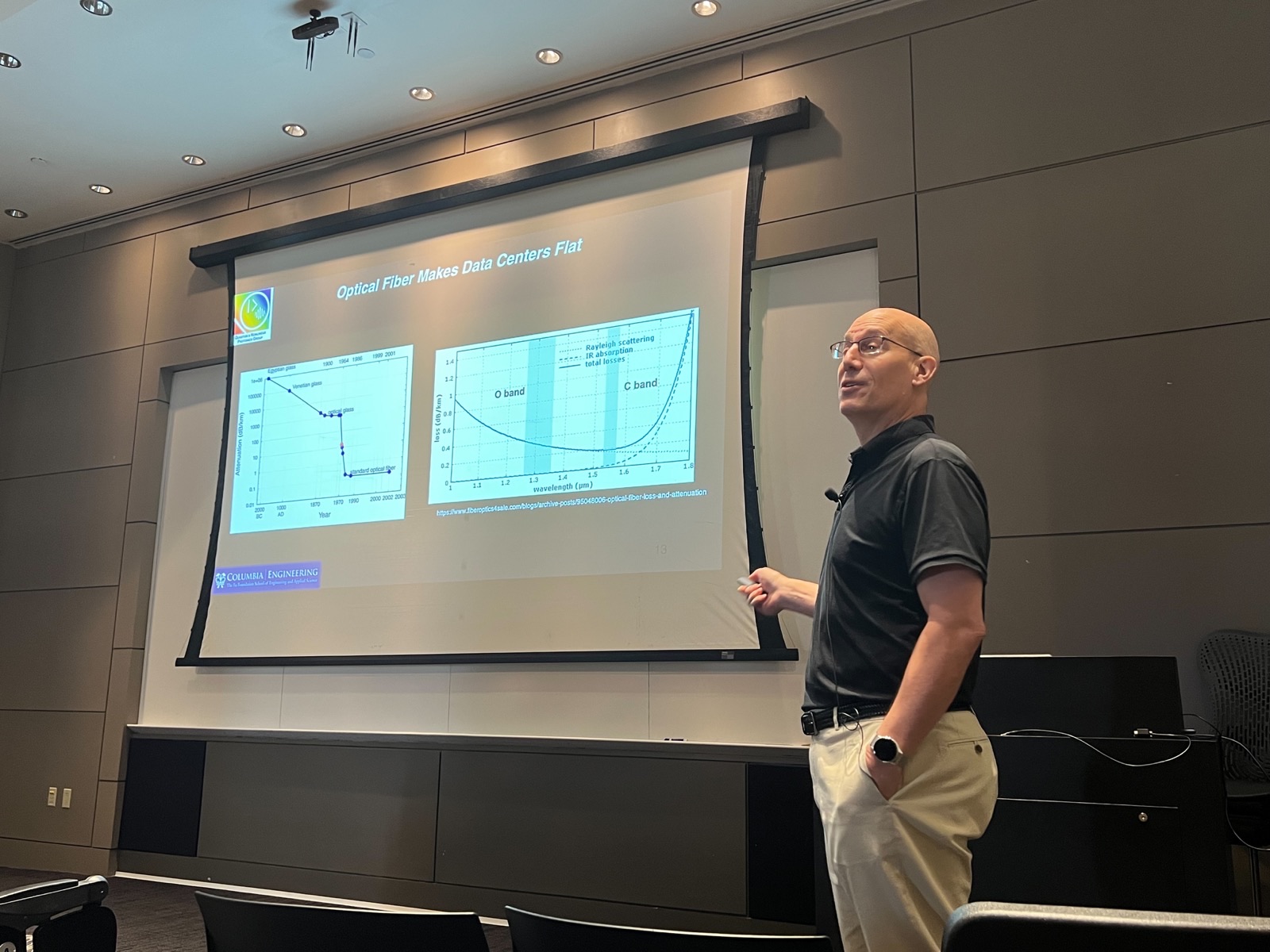
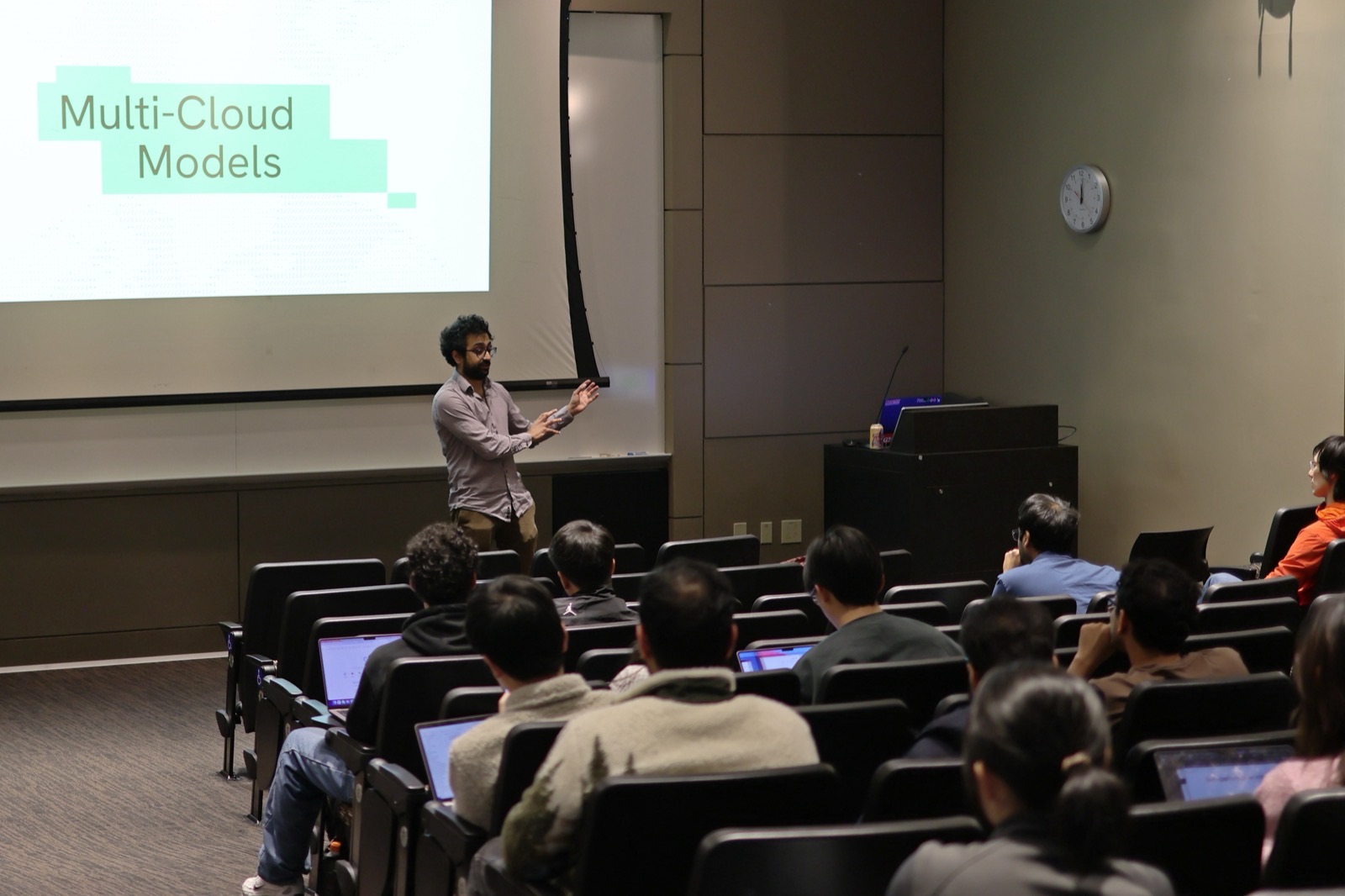
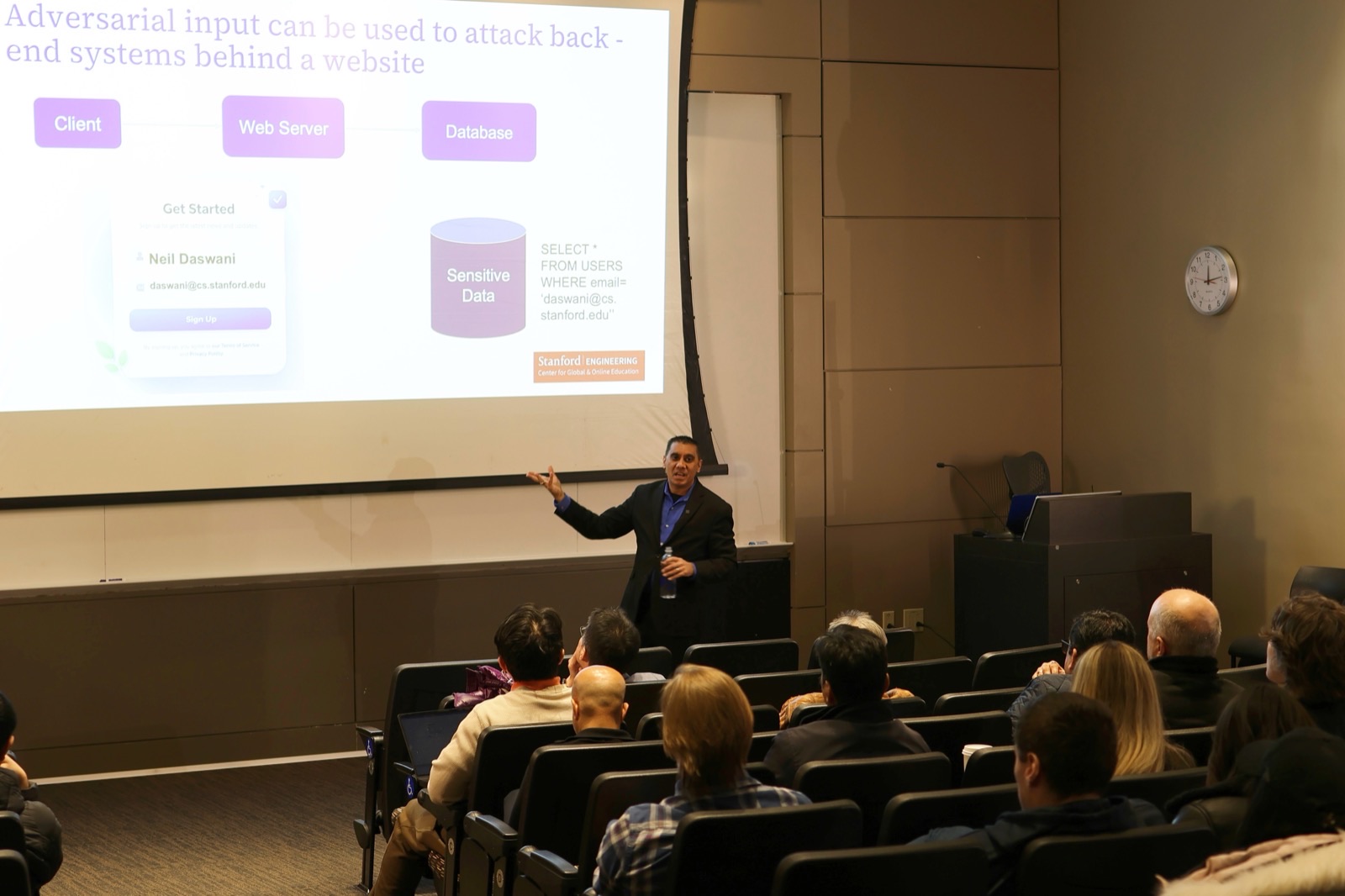
The Columbia Engineering AI Entrepreneurship Series is a bi-weekly speaker series that brings students and faculty at Columbia together with founders, VCs, technologiests, and business leaders to learn about the process of transitioning lessons from research and the classroom into products and value.

When: Bi-weekly Thursdays at 11AM-12:30PM starting January 22, 2026

Where: David Auditorium

Hosts: Tianyi Peng, Eugene Wu

Contact: Yusen Zhang

Upcoming Events

TBA

🤔

11AM January 22, 2026 Davis Auditorium

TBA

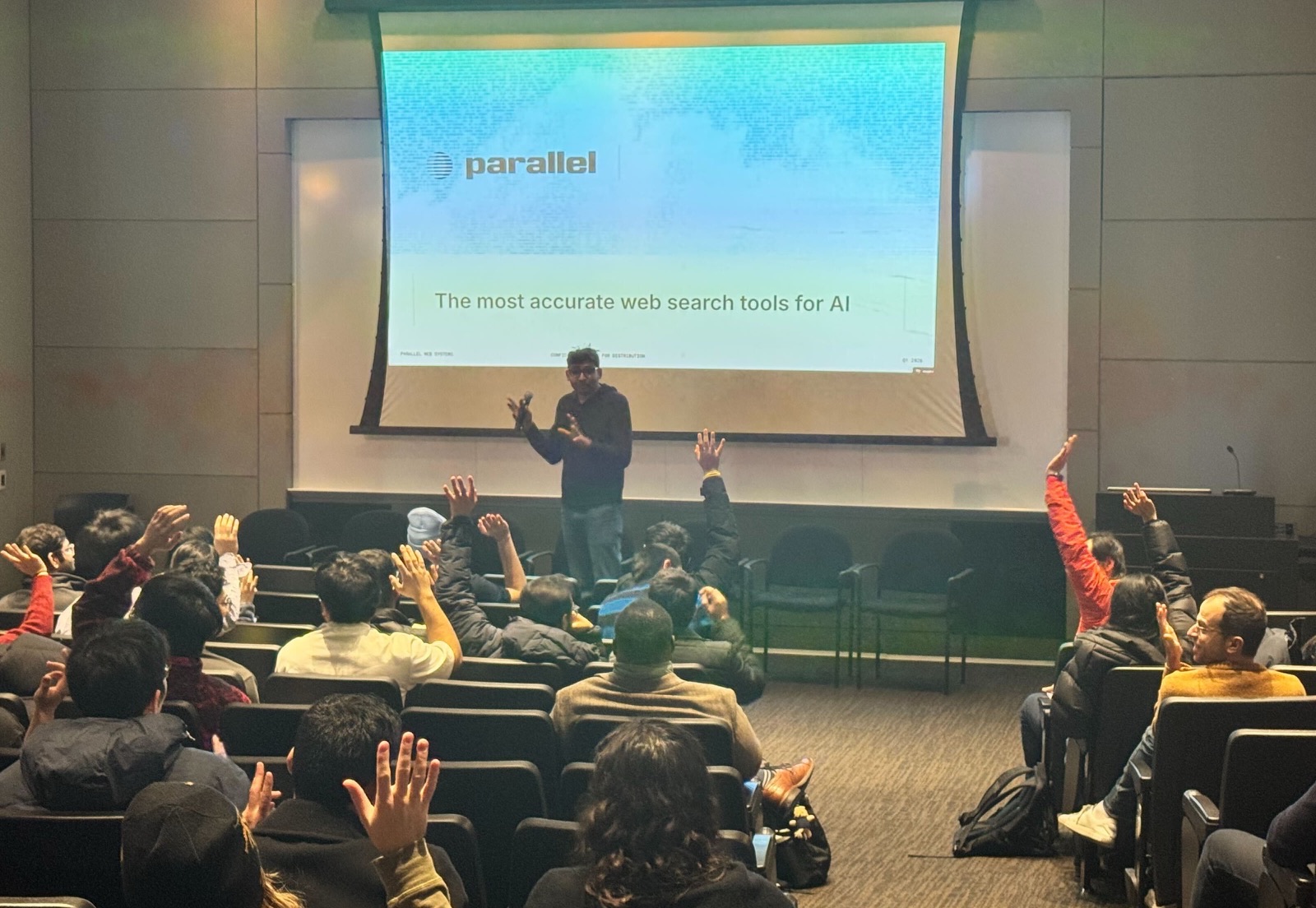
Parag Agrawal, Parallel.ai CEO and Cofounder

11AM February 05, 2026 Davis Auditorium

TBA

🤔

11AM February 19, 2026 Davis Auditorium

TBA

🤔

11AM March 05, 2026 Davis Auditorium

TBA

Neil Daswani, Firebolt Ventures

11AM March 19, 2026 Davis Auditorium

TBA

🤔

11AM April 02, 2026 Davis Auditorium

TBA

🤔

11AM April 16, 2026 Davis Auditorium

TBA

🤔

11AM April 30, 2026 Davis Auditorium

Past Events

Focus is Everything - How to Effectively Navigate the AI Landscape

Aaron Vontell, Anthropic

7PM September 09, 2025 Davis Auditorium

In this talk, Aaron will walk through his journey building in the AI space, detailing his learnings from Instabase, his own AI startup Regression Games, and now his experience at Anthropic. This talk will focus on the importance of focusing on specific problems and navigating frequently-changing technological landscapes, and how to apply cutting-edge research in record time.

Lessons for Building Valuable Domain-Specific AI Products

Tom Effland, Noetica

7PM September 23, 2025 Davis Auditorium

This talk shares lessons learned going from NLP researcher to building Noetica, a platform that analyzes populations of complex contracts to determine market standards for deal terms. Along the way I’ll discuss (1) how LLMs have enabled a new opportunity space for hybrid systems that combine extraction capabilities with formal analytical frameworks, (2) how building these systems still requires deep fusion of subject-matter and technical judgment to identify tractable decompositions of seemingly impossible problems, and (3) how this converges to a new version of the Technical Product Manager role. This role is highly suited to technical researchers willing to tackle sector-specific challenges.

Tom Effland is the technical founder and CTO of Noetica AI, a fast-growing VC-backed Series A startup. The company’s AI-powered knowledge platform helps many top law firms improve outcomes in valuable corporate debt, securities, and M&A transactions. Before founding Noetica, Tom earned his PhD in Computer Science from Columbia University. He was advised by Prof. Michael Collins and received support from a NSF Graduate Research Fellowship.

Agents at Scale: Lessons from LinkedIn's Agent Journey

Xiaofeng Wang, LinkedIn

7PM October 07, 2025 Davis Auditorium

Join Xiaofeng Wang, Sr. Engineering Manager at LinkedIn’s Agents Platform, as he takes you behind the scenes of the platform powering all of LinkedIn’s member-facing agentic applications at scale. This talk will trace the GenAI product revolution, from simple prompt‑in‑string use cases to the latest LinkedIn Hiring Assistant. It will show how the Agent Platform evolved to enable these experiences. Xiaofeng will share the technical foundations, organizational challenges, hiring strategies, and hard‑won lessons that shaped LinkedIn’s journey, highlighting how the team bridged open‑source innovation with enterprise‑grade infrastructure, built seamless developer experiences, and enforced trust and responsible AI from day one. Whether you’re a researcher, engineer, product leader, or entrepreneur, this talk offers a front-row look at LinkedIn’s agentic journey, the latest trends in agent development, and what it takes to transform prototypes into impactful, production-grade agents at enterprise scale.

Xiaofeng Wang is a Senior Engineering Manager at LinkedIn, where he leads the Agents Platform team, building the foundational technologies that enable the entire engineering organization to deliver agentic experiences. His team is responsible for the agent runtime platform, agent framework, and Cognitive Memory Agent. He and his team have also been invited to speak at various leading industry conferences. In his previous role at LinkedIn, Xiaofeng led the first team dedicated to Generative AI Foundations, developing infrastructure, platforms, and tooling from the ground up to power all of LinkedIn’s member-facing GenAI products since 2022. Before that, he worked as an engineer and data scientist in the Data Science Productivity and Research team, building platforms to automate advanced data science analyses such as A/B testing, deep dives, and observational causal studies. Prior to LinkedIn, Xiaofeng worked at Bank of America Merrill Lynch, where he led the team building recommendation systems for the Merrill Edge’s personalized investing platform. He received his Ph.D. in Systems and Information Engineering from the University of Virginia.

How to Build Cursor for Law

Thomas Bueler-Faudree, August

7PM October 21, 2025 Davis Auditorium

Modern document-heavy work in law, finance, and consulting is repetitive, bespoke, and review heavy. Code generation tools like Cursor have reshaped how developers work, but that shift has not happened in law. Legal tasks are hard to measure and even harder to “unit test,” which is why many AI tools miss the mark.

This talk shows how August is building agents that do better: the right indexing methods, visible state, disciplined tool use, and citations at every step to cleanly automate real professional workflows. We’ll walk through a multi-step research agent (e.g., over SEC filings) that plans the task, retrieves the right sources, routes to the relevant sections, and drafts grounded legal answers.

Attendees will leave with a lightweight design pattern for credence domains like law. We will also share our growth and go-to-market. We are productizing law-firm workflows and, in some cases, selling with the firm to their clients. This is a new model that is gaining traction across professional services.

Thomas Bueler-Faudree is the co-founder of August, where he leads engineering and product. He earned a bachelor’s degree in computer science and history from Columbia University. At Columbia he worked in the CRIS Lab and CML.

Warehouse Adaptation of Robots and AI Systems

Vivian Zhang, WarehouseRobot.ai

7PM November 04, 2025 Davis Auditorium

Autonomous warehouse systems represent one of the most advanced and large-scale examples of embodied multi-agent intelligence operating in the physical world. Thousands of mobile robots collaborate continuously to move, pick, and sort goods in dynamic, uncertain environments—achieving high efficiency, adaptability, and robustness in real time.

In this talk, I will discuss how warehouse robotics offers both a practical foundation and conceptual inspiration for the design of AI systems. I will introduce the market context and technical underpinnings of large-scale robotic automation, then explore how intelligence emerges through coordination, perception, and control across distributed agents. I will also discuss how large language models (LLMs) may extend this paradigm—enabling natural language tasking, high-level reasoning, and seamless human–AI collaboration in embodied systems.

Finally, I will reflect on how lessons from large-scale robotic coordination can inform the broader design of the warehouse automation ecosystems, highlighting new directions for research at the intersection of autonomy, learning, and collective intelligence.

Vivian Zhang is the Chief Executive Officer of WarehouseRobot.AI, where she leads research and development in intelligent robotics, large-scale multi-agent coordination, and autonomous warehouse systems. Her work spans planning under uncertainty, human–AI collaboration, and the integration of large language models into embodied intelligence. Vivian’s perspective bridges industrial-scale deployment and AI research, with a focus on how real-world robotics can inform the next generation of AI agents and collective intelligence systems. Her portfolio of AI startups and AI VC fund can be found at https://viviancompanies.com/ and at https://extelligenceinvest.com/.

Vivian was named one of the Top 100 Most Influential Chinese by Forbes and recognized among 50 top most well known Data Scientists by CBNData. Vivian’s always happy to hear from founders and fellows — feel free to reach out anytime!

AI Site Reliability Engineers: Automating Incident Response in Complex Systems

Anish Agrawal, Traversal

7PM November 18, 2025 Davis Auditorium

In this presentation, I will describe ongoing work at Traversal, where our team is developing an AI Site Reliability Engineer (SRE) designed to assist enterprises in diagnosing and mitigating production incidents, with the broader goal of improving the resilience of large-scale, mission- critical systems. I will outline why incident troubleshooting is rapidly becoming a central bottleneck in realizing end-to-end automation of the software development lifecycle (SDLC), particularly as organizations adopt increasingly complex cloud-native architectures and integrate AI-driven tooling across their operational workflows.

From a research perspective, automated incident response represents a technically rich and largely underexplored problem space. I will highlight how it brings together challenges at the intersection of agentic system design, large language model evaluation, causal inference on unstructured data, and time-series modeling of high-dimensional telemetry. These domains converge in the task of enabling AI systems to form hypotheses, reason under uncertainty, and propose actionable remediations in environments characterized by incomplete information, noisy signals, and strict reliability constraints. Our goal in this work is not only to build a practical system, but also to surface open problems and novel research opportunities for the broader community.

Anish Agarwal is the CEO and Cofounder of Traversal, a startup building AI Site Reliability Engineer agents to help teams diagnose and remediate complex production incidents, and an Assistant Professor at Columbia University. His work focuses on causal machine learning and data-driven decision-making in complex, real-world systems.

AI Entrepreneurship: Obstacles, Opportunities, and Outcomes

Anish Das Sarma, Reinforce Labs

7PM December 02, 2025 Davis Auditorium

Building an AI startup today is exciting, but also uniquely challenging. In this talk, I’ll offer a transparent, behind-the-scenes look at the realities of modern AI entrepreneurship. We are in one of the fastest-moving technology cycles in history. Drawing from firsthand experience as a repeat founder, I’ll unpack the full spectrum of an entrepreneur’s journey exploring obstacles, opportunities, and outcomes. You will leave with an honest, grounded understanding of what it takes, what to expect, and why, despite the challenges, this may be one of the most exciting times in history to build in AI.

Anish Das Sarma is the Founder and CEO of Reinforce Labs, a startup dedicated to ensuring safe, secure, and compliant adoption of enterprise AI systems. A repeat founder, Anish previously built Trooly, an AI-powered identity and trust platform that was acquired by Airbnb, where he went on to lead key initiatives in AI, trust & safety. Most recently, Anish served as a Director of Engineering at Google, where he led large-scale AI/ML teams across Google Ads Safety.

Anish holds a Ph.D. in Computer Science from Stanford University and a B.Tech in Computer Science from IIT Bombay. Across more than a decade in AI, he has combined deep technical expertise with hands-on operational leadership, building products and teams across multiple domains of applied ML.

Building Liquid AI

Ramin Hasani, Liquid AI

7PM December 16, 2025 Davis Auditorium

AI progress today is constrained by rising energy use, cost, latency, and complexity. In this talk, I will share the scientific and entrepreneurial journey behind Liquid AI, an MIT spin-off founded to rethink artificial intelligence from first principles. I will describe how breakthroughs in brain-inspired, continuous-time neural networks enabled a new class of Liquid Foundation Models that deliver high-quality multimodal intelligence with dramatically lower compute, memory, and latency. The lecture will explore how these technical advances translate into company-building strategy: designing models around hardware, deploying AI on-device and at scale, and creating defensibility beyond the frontier-model race. I will conclude with lessons on fundraising, partnerships, talent, and building sustainable AI businesses that can operate at planetary scale.

Ramin Hasani is the co-founder and CEO of Liquid AI and a research affiliate at MIT CSAIL. Previously, he was jointly appointed as a Principal Machine Learning Scientist at the Vanguard Group and a Research Affiliate at MIT CSAIL. Ramin’s research focuses on robust deep learning and decision-making in complex dynamical systems. Prior to that, he was a Postdoctoral Associate at CSAIL MIT, leading research on modeling intelligence and sequential decision-making. He received his Ph.D. degree with distinction in Computer Science from the Vienna University of Technology, Austria. His Ph.D. dissertation and continued research on Liquid Neural Networks got recognized internationally with numerous nominations and awards.

Sponsored and Organized By

DAPLab Logo Columbia Engineering Logo